
Three Things I No Longer Apologise For
On guilt, money, and the quiet permission to spend on yourself
The Way I Used To Spend
It is 6 am. The house is quiet, as I am the only one up and about. I come out of the bathroom after having my bath.
I open the door of the wardrobe and take my Nivea body milk from the second shelf, placed alongside other personal care items.
I take a blob of the lotion and apply it in a hurry only to the areas on my arms and feet that I know will be exposed when I wear my scrubs.
The Exercise
It is 11 am, and I am sitting on my bed with folded legs. My wooden laptop table is in front of me, and I am reading Financial Feminist by Tori Dunlap from the Moon+ Reader Pro app on my phone.
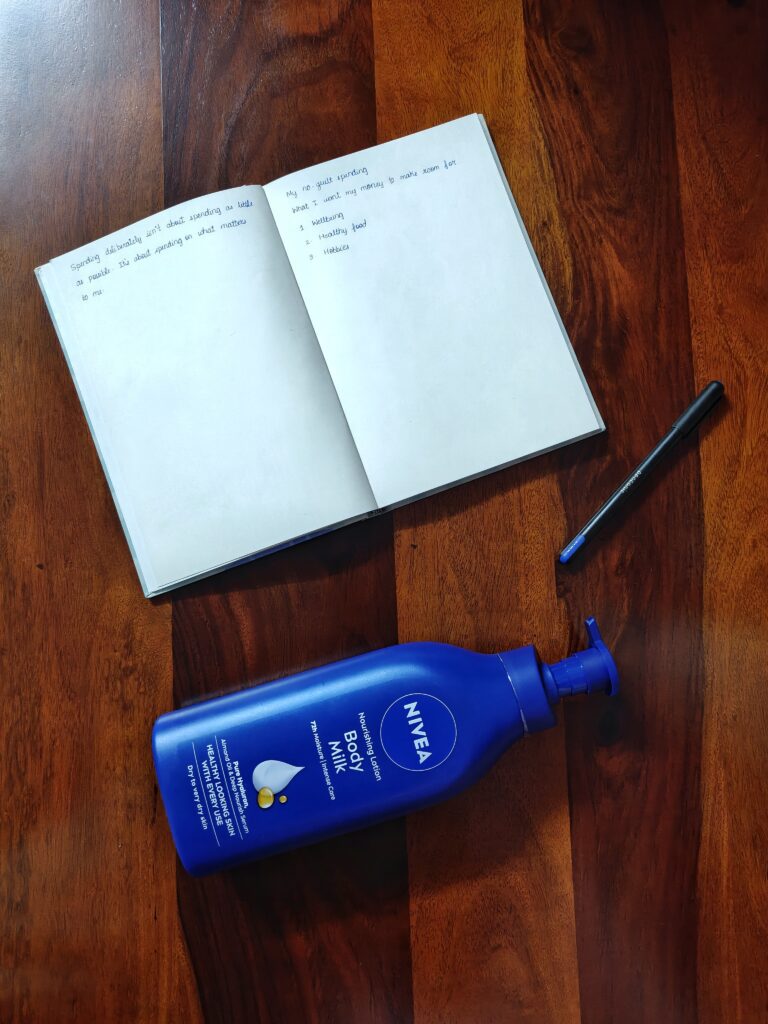
I am still at the beginning of the book. I have my three-hundred-page classmate notebook open on the table. It has clear white pages. I have a blue pen in my hand, as I have been taking notes in the book.
I am at the part in the book where the author asks us to identify our three no-guilt spending categories.
I am astounded. I did not know until then that I could spend money guilt-free on anything at all. It had taken me years to build my relationship with money, and guilt had been part of it from the beginning.
Until then, spending on myself had always needed a reason. A need I could name. An occasion I could point to.
The idea that I could spend on something simply because it made my life better, not because it was necessary, just because it brought me pleasure, was one I had not considered before.
I sit with this idea for a moment.
I dig into my brain and write the three categories one after the other in order of priority: wellbeing, healthy food and hobbies.
The Three Categories
I have been wanting to meditate with guided instructions for a long time.
I am not new to meditation. I have been meditating on and off for a few years now, but it is spiritual meditation. Ever since I became an atheist, I see no point in doing that anymore.
But I love the act of meditation itself, so I research the best guided meditation apps and find Balance.
I download the app from the Play Store and open it. I see it has a subscription of 2500 rupees per annum for the first year and 4000 rupees every subsequent year.
I listen to two or three meditation commentaries available for free and love them.
My hand hovers over the payment button.
I had never spent money on an app subscription apart from OTT before this. I think about how much I love meditating every morning.
I take a deep breath and make the payment through UPI and set up auto-pay for every year.
I recently discovered creative and junk journaling.
I have always loved stationery. I started collecting ephemera and storing receipts, photos with friends, paper bags of food and other things I can save.
I open the Amazon app and add the supplies I need for my creative journaling, from the cutting mat and precision tweezers to stickers and scrapbook paper.
I have the same breakfast every day. Oats and milk. It is healthy, simple and easy enough to make.
I stand in front of the grocery store where we obtain our monthly ration.
I think about how my breakfast would be balanced if I added dried fruits and seeds to it.
I tell the person behind the counter to add 500 gms of kaju, badam, kismis and sunflower and pumpkin seeds to our grocery list this month.
The primary health care centre under which I am posted is about an hour away from my home. When we have a meeting there, I usually drive all the way on my bike and experience fatigue and a headache when I arrive there.
I am in my bedroom, ready to leave for my 10 am meeting at the PHC.
I go to the hall and almost instinctively reach for my bike keys from the wooden key-chain holder.
I pull my hand back.
I open the Rapido app on my phone and check the price of the ride from here to the PHC.
It says 309 rupees.
I press the book now button.
What Deliberate Spending Actually Means
I used to think being good with money meant spending as little as possible on myself.
Financial Feminist taught me something different. That you are allowed to spend on pleasure.
The question is not if the expenses are truly necessary but whether they bring value, ease, or genuine happiness to my life.
That a life where money only goes toward obligations is not financial discipline; it is just another form of deprivation. I have been learning, slowly, to live without apology.
I now spend freely in my three categories and think very little about cutting costs elsewhere. The two things balance each other naturally. I buy less junk food than I used to.
The Whole Body
I come out of my bathroom.
I bring out my body lotion from my wardrobe. I take a blob and apply it to my arms first, then my legs, my torso and back, and finally my neck and shoulders.
I take half a spoon’s worth of body lotion for each part. I apply the lotion gently, using circular motions.
I scratch the area on my arm to see if I have applied it sufficiently.
Satisfied with the result, I now take my face moisturiser and apply it.
I know the bottle will run out sooner now.
That is fine.
I will replace it.
If this resonated, you might enjoy Letters From a Slow Writer, my occasional newsletter on autonomy, solitude and living deliberately.
Aishwarya is a government doctor in Hyderabad and a personal essayist. She writes about solitude, books, and the quiet work of building a life on her own terms.