
The Mahal and the Hall
On watching fifty people fight for survival from my mother’s sofa
The Ritual
It was 8:40 pm, and I was still on the sofa with my laptop. I was now changing the language on my website from a wellness blog to an essay-writing one.
My mother was sitting on the chair exactly in front of the TV.
I looked at the time again and told my mother that I am going to get potato chips from Hot Chips near my home.
I took my keys from the keychain stand, went down the stairs, and got on my bike. I reached the shop in 5 minutes.
There was an unreasonable amount of traffic these days in the evenings.
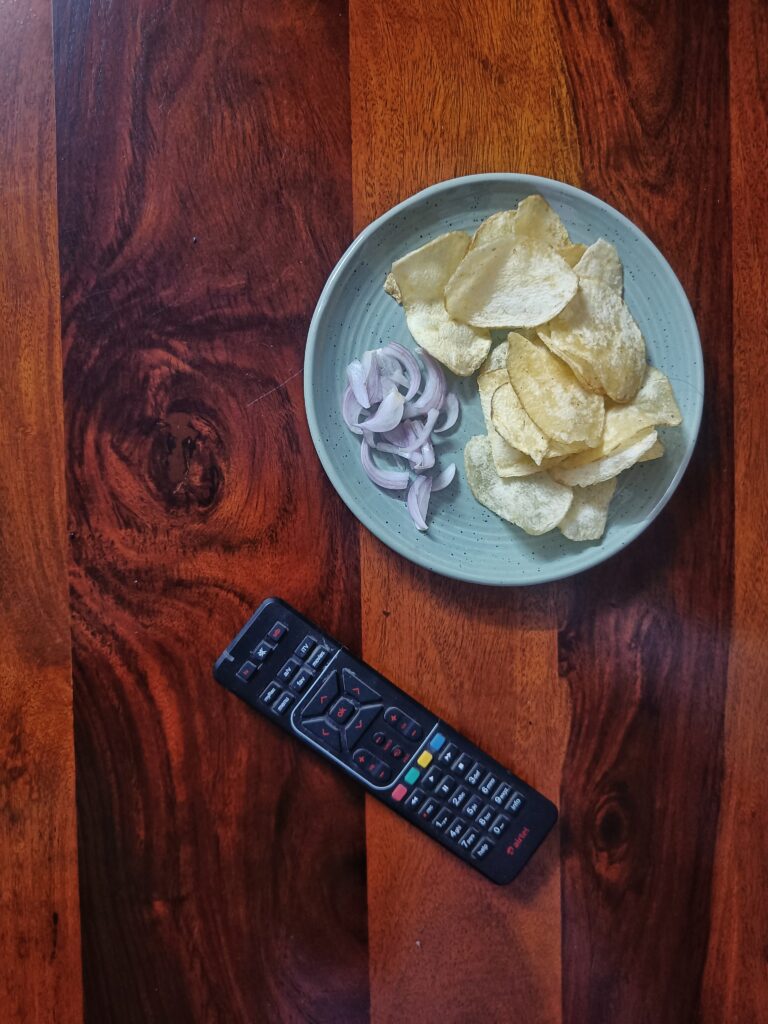
I asked the person at the counter to pack two packets of 250 g of plain salted potato chips. Both my mother and I loved them.
It was 8:55 pm when I came back. Just in time, I thought.
I gave a packet of chips from the cover to my mother.
I took the TV remote lying on the centre table and clicked on JioHotstar.
The reality show, the 50 that we had made a ritual of watching every day, was about to start.
We usually go to bed by 9 pm every day, but ever since the show started, we have been unable to resist watching it as soon as it airs.
My mother handed me a plate with onions ready to eat with the chips.
Both of us relaxed as the show began. We usually go to bed by 9 pm, but The 50 had quietly rewritten our evenings the way good rituals do.
The Mahal
The Mahal held fifty people and had no rules. That was the premise.
What it actually held, as far as I could tell from our sofa, was fifty people deciding very quickly who mattered and who did not.
Though I recognised all the TV actors, I did not know a lot of the social media celebrities, other than the ones who also participated in Big Boss, as I had never been an active user of social media.
Even now, I use it only to post and announce my essays.
The one thing that stood out in the show was how the influencers and TV actors were summing each other up.
Popular TV names like Urvashi Dholakia, Karan Patel, Ridhima Pandit, and Prince, I felt, especially indicated through their behaviour that they were superior.
I remember Prince’s face when he said it.
That these kids had not worked for what they had.
He was not shouting. He did not need to.
The quiet certainty in his voice was enough.
The group of influencers under the team of Rajat Dalal, on many occasions, were seen intimidating a co-contestant and fellow influencer, Maxtern.
There was a time when a contestant, Dushyant, even pushed Maxtern to the floor during a disagreement.
I saw that the show had extremely strong women who were performing with an enthusiasm and fervour equal to men.
But in spite of being strong on their own, they were listening to and playing in groups led by men, Prince and Rajat.
They voted for whoever the men told them to, just because they needed them to save them from nominations.
There was one vote that stayed with me.
The inmates had to choose between bringing back Vanshaj or Karan Patel into the Mahal.
Nehal voted for Vanshaj, against her own group, saying he had an unmatched enthusiasm for the game and a desire to prove himself.
Her teammate, Ridhi, had a problem with this immediately.
She told Nehal that if she belonged to a group, she should vote accordingly.
Nehal stood her ground. She did not change her vote.
It was the most interesting thing I had seen on the show in weeks.
The Boy Who Called Someone Buddha
There was a contestant named Vanshaj who was the youngest contestant on the show, only 21, who got eliminated on the first day itself.
Karan Patel was given the power to send someone home that day.
He eliminated Vanshaj, saying he had not interacted much with any of them.
To be honest, I don’t think it was Karan’s fault.
After all, it was the first day, and very few people knew each other. So everybody decided to eliminate Vanshaj together.
Someone had to go home that day. It was unfortunate that it was him.
But instead of taking it in the right spirit, Vanshaj called Karan a ‘buddha,’ meaning an old man, which was very disrespectful.
He came back as a wildcard, and his performances in the tasks were exceptional.
He was so talented and had a lot of promise.
My mother loved his Gen Z confidence, but something inside me snagged when he called him Buddha.
Age is something that is coming for all of us, no matter what we do.
How can something as common and biological as age be the reason to degrade someone and make them feel ashamed?
Two Women, One Screen
Vanshaj’s comment was where we disagreed.
My mother saw confidence, and I saw disrespect.
We were both reading the boy differently.
Now that I think of it, my mother loved the boy’s attitude of not caring what others thought about him and his self-assurance to do what he thought was right in the moment.
I realised that she was fed up with always being expected to do what elders or society thought was right instead of what she wanted to do.
That is why she admired Vanshaj’s blatancy.
All her life, she was told to respect, listen to, and follow elders, but then this 21-year-old boy showed her that we did not have to do that.
That we did not have to respect elders just for their age, but based on their behaviour.
She was more tolerant of his behaviour because she had not been afforded that freedom in her time.
She had always admired me and other people asserting themselves.
She told me many times that she is learning how to set boundaries from me because it was an alien concept to her, and when she was young, talking back to or questioning elders was considered rude. I had seen this same thing in other women’s lives too, how much of themselves they quietly handed over, and how long it took to want it back.
I saw Vanshaj’s behaviour as impolite because I am already following that principle in effect.
I don’t bow down to elders just because of their age.
When I think something is wrong, I speak up. But I also try to do so respectfully.
Vanshaj could have let his disappointment be known by expressing his viewpoint courteously.
I would have respected him more for it.
I had not grown up being told to be silent the way my mother had, so I did not view his rudeness as courage as she did.
The Hall
I realise the television has gone dark.
My mother and I sat for a moment before getting up.
She asked me what I would like to have for lunch tomorrow.
I told her to cook whatever she felt like.
She nods and gets up.
I realise that she has been watching people her whole life with the same generosity she gave Vanshaj.
She is never as quick to judge as I am.
I get up and go to bed and think about what it costs to see people charitably and whether I could learn to do it.
My mother has been practising it her whole life without calling it anything.
If this resonated, you might enjoy Letters From a Slow Writer, my occasional newsletter on autonomy, solitude, and living deliberately.

Aishwarya is a government doctor in Hyderabad and a personal essayist. She writes about solitude, books, and the quiet work of building a life on her own terms.