
On Watching Women Choose
Bridgerton, autonomy, and what independence really means
A Thursday Evening With Bridgerton
On 29th January, 2026, one of my favourite shows, Bridgerton, returned with its fourth season. I had been waiting for the next season for almost two years now. I had watched the trailer for part one a few days back and was practically bubbling with excitement on the anticipated day. I knew Netflix would release the instalment at 4 pm sharp because that was the exact time they had released the previous season, Penelope and Colin’s. But I still kept checking it at work, so I wouldn’t miss it if they released it sooner this year.
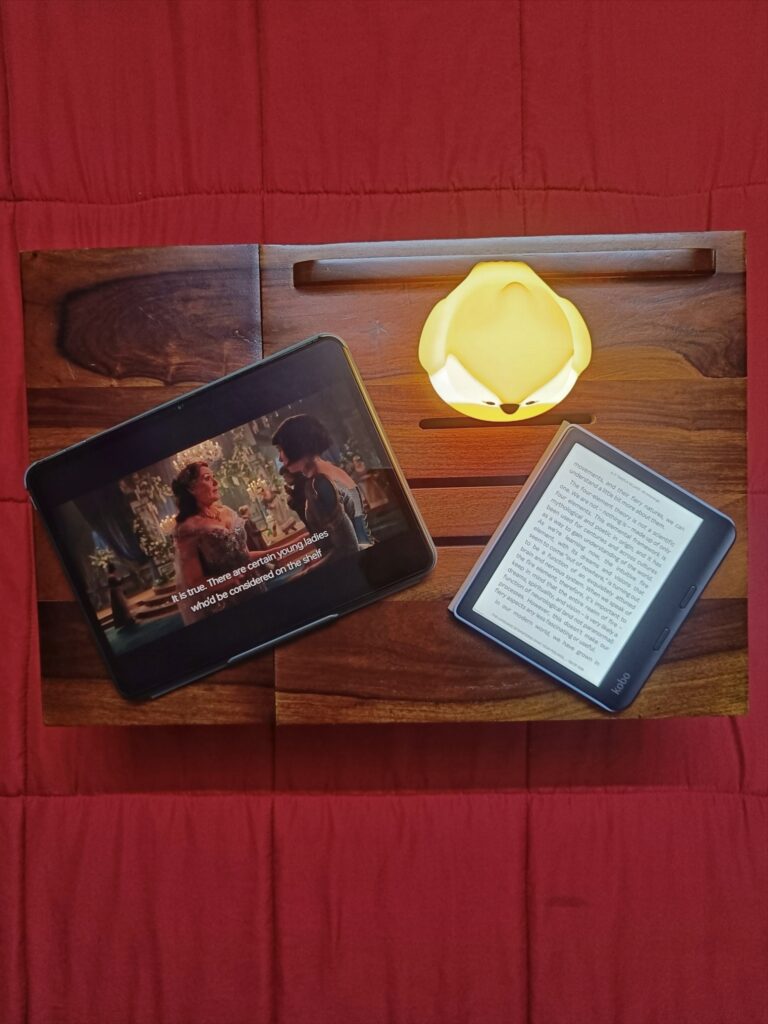
I came home and had KFC that day because who’s stopping me from celebrating the occasion? I got into bed and pulled the cosy comforter all around me. I then put on my noise-cancelling headphones and opened the Netflix app on my tablet. Then I leaned back.
I saw Eloise appear on screen and was elated instantly. How I’d missed her. How I’d missed all of them. The tube light was on in my room, and I immediately dimmed it for effect.
When Eloise tells Lady Bridgerton that she has decided to be a spinster, I hear myself saying, “Same girl, same.” And when Violet Bridgerton finally takes a step towards her own love story after years of dedicating herself entirely to her family, I find myself cheering for her. Go, Lady Bridgerton!
Violet: Love After Duty
Violet Bridgerton, who already seems to have had a full life, chooses love again this season. It is extremely endearing to watch her become a teenager again.
She exerts her autonomy by indulging in romance when society dictates that she should be content with her duties as a mother and the lady of the house. She does not wait around for permission.
I especially loved the scene where she expresses her doubts about being in love again with her love interest on the show, Marcus Anderson, on the couch when she visits him at his home. I thought that the scene beautifully carried the emotional vulnerability and hesitations of women who are writing a new chapter in love again after years of obligation.
She shows us what it means to desire again without shame attached to it. Violet’s story is not about fantasy. It is about agency after duty.
Eloise: Resisting Reduction
Eloise is hands down my favourite character in Bridgerton. I relate to her more than any other character in any other series.
Even I feel that marriage is the end of a woman’s life, if I may be so dramatic. A life full of drudgery, both physical and mental. I thought it was brilliant when she tells Cressida in season three about how we, as women, would have so much time in our lives if we simply stopped obsessing over marriage and men.
There are days when I have sacrificed food and sleep for an entertaining or insightful read. And that is extremely telling because I never sacrifice food or sleep for anything. Never. I question rigid narratives, even when my questioning makes others uncomfortable.
Though I must admit that I am not as harsh as she is when I encounter people who have different opinions. I also think that I am not as dismissive of the likes and dislikes of other people, either.
But despite everything, if you understand Eloise as I do, you will grasp the fact that she is not, in fact, resisting marriage; she is resisting being reduced. And we can hate no one for it.
A Conversation in the Clinic
I was sitting in the pharmacy room of the government clinic where I work on a Tuesday afternoon two months ago. I was wearing a blue sweater with white flowers on it. My staff nurse and supporting staff were both on leave that day, so I was alone in the facility.
The room smelled of medicine and spirit. I sat in my staff nurse’s chair so that I could easily reach for the drugs to give them to the patients. The room was cold even though the fan was not switched on.
The ASHA worker for our facility came in to wish me well. She was a genial, friendly lady in her fifties who always came by to see us when she could. The ANM and ASHA worker had their workstation in the gram panchayath office building just next to us. She was wearing a salwar kameez, just like every other day.
She greeted me and asked me out of the blue if I was married. I replied in the negative.
She then proceeded to ask what my age was. She went on to assume my timeline and told me I would soon be married. I told her I had no intention of getting married ever.
Now, this was the first time I was having a conversation about my decision to stay single with someone who was neither my family nor a friend. I was genuinely amused by the amount of interest she was showing in my life.
I told her I was content with my life as it is and that marriage and children were not for me. She had an expression on her face that said she was not prepared for my answer.
She went on to ask me what the point of a woman’s existence is if she does not have a husband and kids. Why did God create us if not to nurture a family?
I understood why she would think that way because even I had believed that social script for most of my life.
I told her I believed God had created us so that we could live with happiness and freedom, doing the things we love and not living in servitude to in-laws, husbands, or children. I immediately thought of Eloise when I said that. She would be so proud of me.
Lavanya, the woman, laughed and agreed with me that the purpose of life is indeed to be happy and that all of us need to do everything in our power to do things that bring us contentment.
Autonomy Is Not Uniform
I always thought that love meant compromise. Growing up, I watched the identities of many women be erased and their lives consumed by the needs of their husbands and in-laws.
I’ve heard narratives like the idea that a man’s heart is won through his stomach and that a good wife and mother is the one who puts everybody else’s needs above her own, thrown around casually. All things meant to tie women to the kitchen and reward self-sacrificing ideologies.
But when I see Violet Bridgerton choose companionship and Eloise choose solitude on their own terms, I realise the fault was never partnership; it was the lack of choice.
I have never been someone who centred her life around romance. I have always centred it around curiosity and the quiet of my own company, something I explore more deeply in Choosing Solitude Without Apology.
When I see the women in Bridgerton falling in love and living their best lives after marriage with extremely loving and supportive husbands, I realise that perhaps love is not the opposite of independence. Perhaps it is another way of choosing.
I really wish Eloise stays unmarried in the show, not because marriage is bad, but because I want to see one woman on screen who chooses solitude and gets to keep it.
A Quiet Realisation
The screen of my tablet went dark. I sat in silence and did not move.
I realised I do not have to be like any of these women completely. I can define independence in my own unique terms, just like each of them.
I had always equated marriage with self-erasure, but watching Violet move towards love, hesitate, and then decide, I knew I had it all wrong.
I genuinely do not believe marriage is for me, but now I do not see it as a threat to autonomy either.
I put the tablet back in its sleeve, picked up my e-reader, and started reading my current book. I lay on the bed in the quiet of my room.
Independence did not feel loud or defiant; it just felt steady.
If this resonated, you might enjoy Letters From a Slow Writer, my occasional newsletter on autonomy, solitude, and living deliberately.

Aishwarya is a government doctor in Hyderabad and a personal essayist. She writes about solitude, money, books, and the quiet work of building a life on her own terms.